The Cost of Unverified Encounters
Industry research shows that fraud, waste, abuse, and improper payments may account for up to $100 billion annually in the U.S. healthcare system.
In many programs, 3–10% of total spending may be affected by improper payments or documentation uncertainty.
TruEncounter™ helps organizations strengthen encounter verification by generating secure, tamper-resistant records of real-world encounters, improving transparency and supporting more reliable documentation.
Healthcare organizations, payors, and regulators must rely on documentation to confirm that services actually occurred.
When documentation is incomplete, unverifiable, or disputed, organizations may face:
• improper payments
• administrative investigations
• compliance audits
• documentation disputes
• operational inefficiencies
TruEncounter™ helps address these challenges by generating trusted encounter records designed to confirm when real-world encounters occur.
Why This Matters


Improving verification of real-world encounters can significantly reduce documentation disputes, administrative investigations, and exposure to improper payments.
Example:
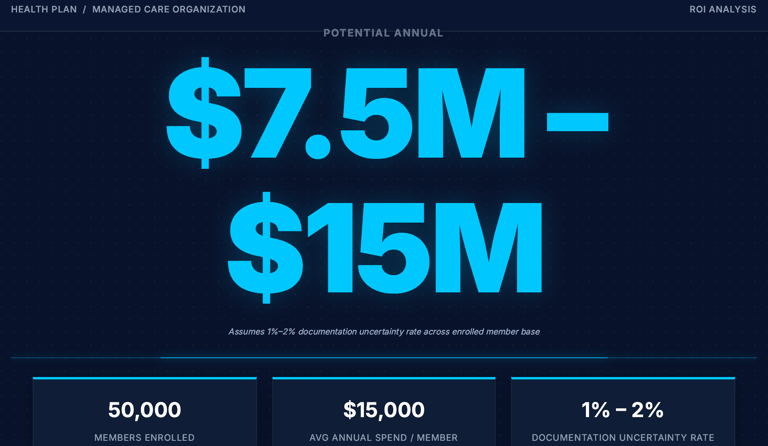
Health Plan
If a managed care organization oversees:
50,000 members receiving services
Average annual spending per member: $15,000
Total annual spending: $750,000,000
TruEncounter™ helps strengthen encounter verification by generating
secure, tamper-resistant records confirming when real-world services occur,
helping organizations reduce documentation disputes and improve financial oversight.
$ Potential Financial Impact $
Example:
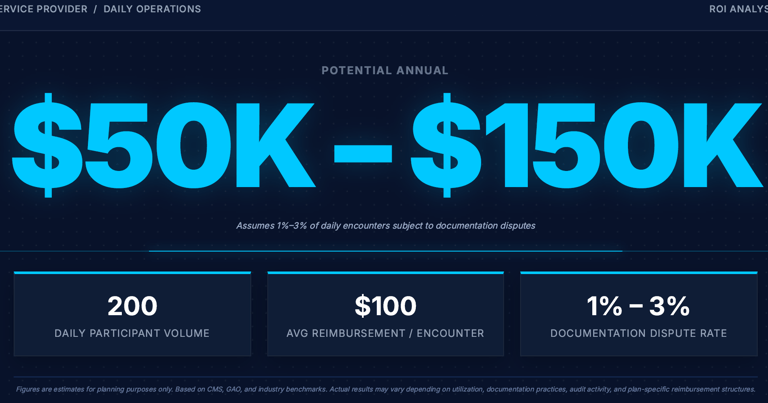
Service Provider
Consider a provider serving:
200 participants daily
Average reimbursement: $100 per participant
Annual service value: 200 × $100 × 250 days
= $5,000,000 annually
By generating secure, tamper-resistant encounter records, TruEncounter™ helps providers strengthen documentation, reduce disputes, and protect verified service revenue..
Example:
Audit Investigations
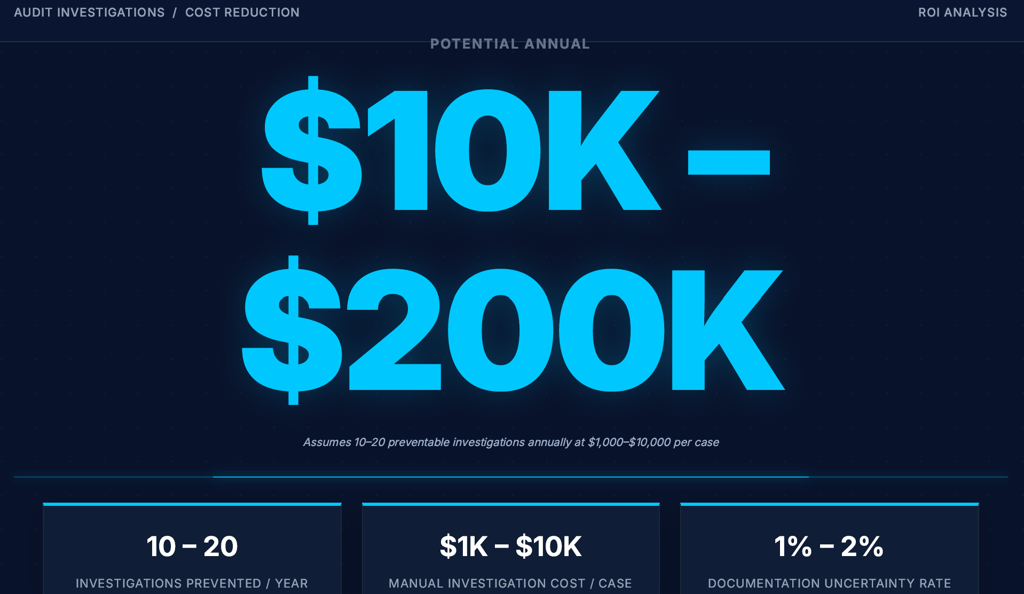
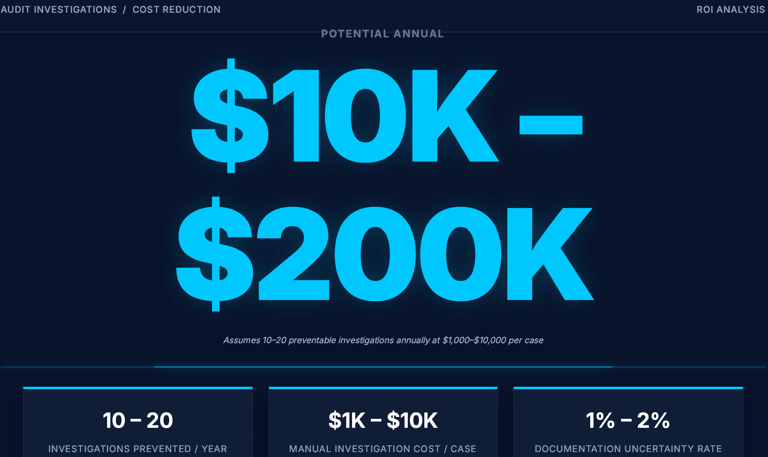
Manual documentation investigations often cost:
$1,000 – $10,000 per investigation
If improved encounter verification prevents 10–20 investigations annually, organizations could potentially reduce costs by:
By generating secure, tamper-resistant encounter records, TruEncounter™ can help reduce documentation disputes and simplify the audit review process.
Benefits for Managed Care Organizations & Payors
Managed care organizations spend significant resources investigating documentation discrepancies and verifying services.
Reduced Fraud, Waste, and Abuse Exposure
Healthcare fraud and improper payments may account for 3–10% of total healthcare spending. Strengthening encounter verification helps reduce exposure to these losses.
Lower Administrative Investigation Costs
Secure encounter records help streamline documentation verification and reduce time spent investigating discrepancies.
Improved Oversight
Trusted encounter records help support more efficient program oversight and verification of services.
Operational Efficiency
Clear verification records can reduce the time required for audits, reviews, and documentation disputes.
Benefits for Regulatory & Government Agencies
Regulatory agencies must ensure that services billed to public programs are accurately documented and verifiable.
Improved Program Integrity
Trusted verification records support stronger oversight of service documentation.
Reduced Audit Complexity
Structured encounter records allow auditors to review documentation more efficiently.
Better Use of Oversight Resources
Clear verification records allow agencies to focus investigative resources on higher-risk cases rather than routine verification checks.
Enhanced Transparency
Secure encounter records help support transparent documentation across regulated environments.
Benefits for Service Providers
Service providers often spend significant time managing documentation, responding to verification requests, and addressing documentation disputes.
Reduced Administrative Burden
Automated encounter verification helps reduce time spent maintaining manual documentation systems.
Fewer Documentation Disputes
Secure encounter records help demonstrate when encounters occur, reducing disputes with payors or auditors.
Operational Efficiency
Improved documentation processes allow staff to focus more time on delivering services.
Stronger Relationships with Payors
Reliable encounter verification increases confidence in service documentation.







Industry Data & Research
Sources
The following estimates provide context regarding documentation challenges, improper payments, and administrative burden within healthcare system
• Healthcare fraud, waste, and abuse may account for 3–10% of total healthcare spending.
Industry estimates from healthcare integrity organizations suggest that fraud, waste, and abuse represent a significant portion of healthcare expenditures globally.
• Improper payments across U.S. healthcare programs may exceed $100B annually.
Federal oversight reports have identified substantial improper payment levels across multiple healthcare programs.
• Medicaid improper payment rates have been reported between approximately 5–8% depending on the year and reporting methodology.
These estimates are published through federal payment accuracy measurement programs.
• Manual investigations of documentation discrepancies can cost thousands of dollars per case.
Compliance reviews, documentation audits, and fraud investigations can require significant administrative resources.
• Healthcare professionals may spend 15–25% of their time on documentation-related tasks.
Administrative documentation burden has been widely reported across multiple healthcare sectors.
These findings highlight the importance of improving verification, transparency, and documentation integrity within healthcare services.
The industry data referenced above is derived from publicly available reports and research from government oversight agencies and healthcare integrity organizations.
• Centers for Medicare & Medicaid Services (CMS)
Improper Payment Reports
https://www.cms.gov/improperpayments
• U.S. Department of Health & Human Services – Office of Inspector General (HHS-OIG)
Fraud, Waste, and Abuse Oversight Reports
https://oig.hhs.gov
• National Health Care Anti-Fraud Association (NHCAA)
Healthcare Fraud Cost Estimates
https://www.nhcaa.org
• Government Accountability Office (GAO)
Healthcare Fraud and Program Integrity Reports
https://www.gao.gov
• Medicaid and CHIP Payment Error Rate Measurement (PERM)
Improper Payment Measurement Program
https://www.cms.gov/research-statistics-data-and-systems/monitoring-programs/medicaid-and-chip-payment-error-rate-measurement
Note:
Industry statistics presented above are derived from publicly available research and oversight reports and are intended to provide general context regarding healthcare documentation challenges and improper payment risks.
Contact
Reach out for demos or support
Phone
info@truencounter.com
561-501-1697
© 2026. All rights reserved. Certain technologies described on this website are subject to pending patent protection.
TruEncounter™ is a technology platform built on patent-pending methods for secure encounter verification, designed to generate tamper-resistant records confirming when real-world services occur.
© 2026 TruEncounter™ Terms of Use | Privacy Policy | Photo & Visual Capture Notice | Platform License Terms | Security and Compliance